Long working hours, dual-income households, and the reality of caring for ageing parents leave many Singapore homeowners with little time for housework.
On top of that, the year-round humidity causes mould, busy roads and ongoing construction bring in dust, and regular home cooking leaves grease in the kitchen. This is why many households now hire outsourced cleaning services. The next question is which housework to outsource first, and which jobs a part-time helper cannot take on.
Key Takeaways
- Routine sessions cover the recurring tasks most homes need weekly: bathrooms, kitchens, floors, dusting, ironing, and rubbish removal.
- Specialised cleaning services such as deep cleans, mattress sanitisation, and pest control are usually booked quarterly or per project.
- Session length scales with the home (roughly 3 hours for a 2-room flat, 6 hours and up for landed property).
- Some tasks fall outside what a part-time helper can do, including exterior window cleaning at heights, heavy furniture moving, and medical-grade caregiving.
What Is a Part-Time Helper in Singapore?
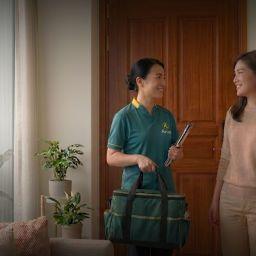
A part-time helper in Singapore is a domestic worker deployed by a company approved under the Ministry of Manpower’s Household Services Scheme (HSS). Unlike a live-in Migrant Domestic Worker, a part-time helper works in fixed session blocks (usually 3 or 4 hours) and goes home after each booking.
The company, not the homeowner, handles the helper’s training, salary, and Work Injury Compensation Act (WICA) insurance, which keeps the arrangement straightforward and legally compliant for households.
Which Routine Housework Should You Outsource First?
If you’re new to hiring a part-time cleaner, start with the recurring tasks that take up the most time each week and matter most for hygiene. The six tasks below are what a part-time helper from Avalon Services is trained to handle in a standard session.
#1 — Bathroom cleaning
Bathrooms are the highest-humidity zone in any home. Mould, limescale, and soap scum build up quickly on tile grout, silicone seals, and shower screens. Trained helpers know which descalers and cleaners are safe for glass coatings and laminate finishes.
#2 — Kitchen cleaning
Frequent home-cooked meals and high-heat frying leave a layer of grease on stovetops, cooker hoods, and cabinet fronts, which attracts dust and pests if untreated. A helper handles wipe-downs with degreasers that won’t damage cabinet laminates.
#3 — Mopping and vacuuming
Mopping and vacuuming keep floors free from dust, hair, and outdoor particulates that build up quickly in tropical conditions. The standard approach is to vacuum first, then mop with a pH-neutral solution suited to the floor — marble, parquet, vinyl, or tile.
#4 — Regular dusting
Regular dusting covers shelves, sideboards, electronics, ceiling fan blades, and high ledges. Apart from making the home look tidy, this also helps with indoor air quality, especially for households with young children, elderly residents, or anyone with allergies.
#5 — Ironing
Ironing is one of the most time-consuming weekly tasks for working professionals. A 3- or 4-hour session usually allows time for an ironing batch alongside the cleaning tasks.
#5 — Rubbish removal
Removal of rubbish completes the routine — emptying bins, replacing liners, and disposing of waste at the chute or collection point.
Together, these six tasks make up most weekly home cleaning services in Singapore.
A House Cleaning Checklist for Your First Session
Use this house cleaning checklist as a starting guide when you hire a new part-time helper. It follows the same six routine task categories above.
| Bathrooms | |
| Kitchen | |
| Floors | |
| Dusting | |
| Ironing | |
| Rubbish removal |
When to Book Specialised Cleaning Services Instead
Routine sessions handle weekly maintenance. For more intensive cleaning, you can book a specialised service, usually quarterly or per project.
Specialised bookings fall into three groups:
Project-Based Services
- Post-renovation cleaning
- Move-in cleaning
- Move-out cleaning
These involve dust loads, debris, and chemical residues from construction/renovation or relocation.
Quarterly or Annual Services
- Deep cleaning
- Mattress cleaning and sanitisation
- Upholstery cleaning
- Carpet cleaning
These tackle dust mites, allergens, and embedded grime that routine vacuuming and mopping cannot reach.
As-Needed Services
Both require specialised chemicals and trained technicians, and pest control is also licensed by the National Environment Agency (NEA).
Many households pair a recurring routine session with one or two specialised bookings a year, which keeps the home in good condition without needing to deal with different vendors for each type of job.
Housework Outside a Part-Time Helper’s Scope
A few household tasks can’t be handled by a part-time helper, even on a specialised booking.
- Exterior window cleaning at heights is regulated under MOM and Workplace Safety and Health (WSH) Council guidelines. Window grilles must be locked, an adult must supervise, and the helper must keep both feet on the floor at all times.
- Heavy furniture moving is also off the list because of injury and property damage risk.
- Medical-grade caregiving must be done by licensed home nursing providers.
Anything that requires leaning out or working at height needs a specialist contractor with the right certifications.
How Long Should Each Session Be?
Match the session length to your home’s size and how often you book. The table below shows typical session lengths used for routine cleaning and for specialised deep cleans.
| Property Type | Routine Session | Specialised Deep Clean |
|---|---|---|
| Studio / 2-Room HDB | 3 hours | 4–5 hours |
| 3-Room / 4-Room HDB | 4 hours | 6–8 hours |
| 5-Room HDB / Condo | 5 hours | 8–10 hours |
| Landed Property | 6 hours and up | 10 hours and up (team-based) |
Actual session lengths can vary based on clutter and home condition, so these are only rough guides. Your provider will recommend a specific duration after an initial assessment.
Frequently Asked Questions
How much does a part-time helper cost in Singapore?
Hourly rates for HSS-approved part-time helpers in Singapore generally fall between S$16 and S$30, depending on the company, session length, and any add-on tasks. These are rough guides, so check directly with the provider for current rates before booking.
Is hiring a freelance cleaner cheaper than going through an HSS company?
The cash rate is often lower, but it comes with legal and liability risk. Under the Employment of Foreign Manpower Act, foreign workers can only legally work for the employer they are registered to, so most freelance arrangements involving foreign cleaners are not permitted. HSS-approved companies are the legal route, and the helper is also covered by WICA insurance.
What should I prepare before my part-time helper arrives?
Most providers expect the homeowner to supply a working vacuum cleaner, microfibre cloths, and standard cleaning products such as a degreaser, descaler, glass cleaner, and pH-neutral floor cleaner, along with trash bags.
A clear priority list also helps. For example, “kitchen and bathrooms first, then dusting and ironing if time permits.”
Choosing the Right Provider
The most important check is whether the company is on the official MOM HSS list. This confirms the helper is working legally and is covered by WICA insurance.
After that, look for:
- Clear session-rate transparency
- No surprise add-on fees
- Availability of specialised cleaning services
- A written scope of work for each session
This prevents homeowners from juggling separate vendors as household needs evolve.
Avalon Services is an HSS-compliant provider in Singapore, with home cleaning recently introduced as a parent service category alongside the part-time helper offering. Specialised cleaning is available for households that need more than weekly maintenance, whether that’s a quarterly deep clean, post-renovation work, or a mattress and upholstery refresh.
Book a session through the Avalon Services website to discuss what your household needs.
Sources
- Ministry of Manpower (Singapore) — Household Services Scheme overview and approved company list
- Workplace Safety and Health Council — Window cleaning safety guidelines
- National Environment Agency — Cleaning industry
- Ministry of Manpower (Singapore) — Employment of Foreign Manpower Act
Disclaimer: Cost figures and regulatory details are accurate as of publication and are presented as rough guides only. Verify current MOM HSS listings, rates, and regulations directly with the relevant authorities or service providers before engaging a provider.
Last updated: May 2026

Buy 1 Hour, Get 1 Hour FREE
WhatsApp us to claim your first booking offer.