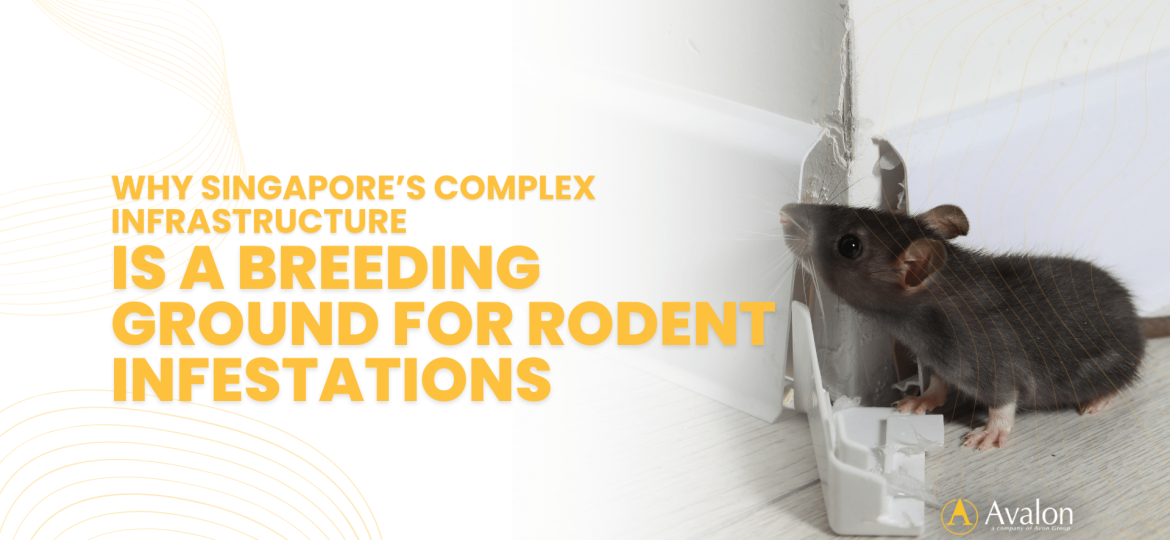
Have you ever thought of the paradox that we live in one of the cleanest and greenest cities in the world, yet we are faced with persistent concerns regarding rodent infestation?
If you see a rat, one would immediately assume that it could be because of poor hygiene. We would assume that someone left a food out or a bin centre was not cleared. Our assumption might be true, and it’s notable that sanitation plays a role. But it is rarely the whole story.
The primary reason that rats thrive here has something to do with the city’s sophisticated, interconnected infrastructure itself. We’ll discuss why the very design of our city matters to pest control, and what you can do about it.
The Three-Layer Problem
The urban density of Singapore lays down a three-layer ecosystem that rats can exploit perfectly.
- The Underground, which contains a massive network of sewers and drains
- The Surface, where we can find bin centres, construction sites, and dining areas
- The Vertical, which comprises high-rise residential and commercial buildings connected by pipes and chutes
Why Your Home is Connected to the Problem
Rats don’t view your home as a separate establishment, like as we would view our homes to be a distinct space from our neighbours’. Rather, they view it as an extension of the street. Because our buildings are physically linked to underground networks, a problem in the main sewer line can, in no time, become a problem in your kitchen cabinet.
Underground Infrastructure
Sewer Systems and Storm Drains
The dark and damp tunnels housing sanitation and drainage pipes serve as safe highways for rats to move unseen as they move across districts. Water is present, shelter too, and easy travel routes are available, bypassing traffic and predators.
The Critical Weak Point
The weak point lies where the public infrastructure meets private property.
If the inspection chamber (IC) covers in your estate are cracked, or if the sewage pipes connecting your building to the main line have defects, rats can effortlessly enter your premises, and just ignore the highway.
If you live in a landed property or the ground floor, make sure that your drain gratings are secured. Also check whether the inspection covers are completely sealed.
Ageing Buildings vs. Modern High-Rises
Every kind of infrastructure poses different risks.
Older HDB Estates
The sheer age of the concrete in older estates contributes to structural fatigue. Small cracks in the foundation or gaps around the old utility pipes can be an opportunity for rodents to infiltrate the space.
Also, rats can ride on improperly maintained older centralised rubbish chute designs and visit any floor.
Modern Buildings Have Vulnerabilities, Too
If you think newer buildings are immune, no they’re not. Modern architecture usually relies on false ceilings, walls, and cladding for aesthetics.
These design features create void spaces behind our walls and above the ceilings.
If electrical and plumbing rises are not properly sealed between floors, a rat can climb from the basement to the penthouse.
You might be able to keep your apartment clean, but if there is a gap in the service dust behind your toilet, a rat from the refuse centre downstairs can find its way in.
The Shared Systems That Connect Your Home to Others
Rubbish Chutes and Bin Centres
Rubbish chutes are one of the most important shared facilities in Singapore. When the chute is dirty with food waste and grease, it becomes an easy source of food for pests throughout the block.
If the chute doors in each unit are rusty or loose, rats can push through them.
Internal Building Pathways
Rats are known to use cable trays which hold electrical wires, and air conditioning trunking as runways. These usually pass through walls to connect different rooms. If the wall opening is even slightly bigger than the pipe, rats can squeeze through.
What Homeowners Can and Should Do
- Check the seal around your AC pipes.
- Make sure your rubbish chute door is airtight and not rusty.
Construction and Urban Development
Why Construction Displaces Rats
Singapore is in a constant state of renewal. When an old building is demolished or a new MRT line is dug, the vibrations and destruction of habitat disturb existing rat colonies.
This is known as displacement. When their nests are destroyed, rats migrate to the nearest quiet and safe structure. Often than not, that structure is your home.
So if you see heavy machinery or digging nearby, be hyper-vigilant. This is the prime time to seal your home, as displaced rats will be aggressively looking for new shelter.
Waste Management
Bin centres are inevitable in urban planning. However, the management of these centres dictates the pest population. Even if the centre is 50 metres away, if it is not cleared frequently enough, it could be the reason for a population boom.
Once that population exceeds the bin centre’s capacity, the overflow moves into nearby residential units.
Climate and Weather Factors
Why the Climate is Heaven for Rats
Rodents are highly adaptable, and they thrive in warm, humid conditions. Singapore offers an all-year breeding season for rats and mice.
Unlike colder countries where breeding might slow in winter, our infrastructure stays warm.
Weather Events That Push Rats Indoors
During our intense monsoon seasons, drains and canals fill rapidly with water. Rats living in these storm drains are forced to evacuate to higher ground. This is often why you see a sudden spike in activity during rainy months.
Know Your Enemy
Understanding which rat you are dealing with helps identify the infrastructure flaw they are exploiting.
Norway Rats (Sewer Rats)
- →They prefer ground levels and burrows.
- →They usually enter via defective sewers, drains, or gaps under doors.
Roof Rats
- →Excellent climbers. They prefer high places.
- →They exploit overhanging tree branches, false ceilings, roof spaces, and vertical pipes
How Rats Exploit Your Home’s Infrastructure
Their Common Entry Points
Rats only need a gap the size of a 50-cent coin to enter. Examples of their possible modes of entry are:
- Gaps under doors
- Utility penetrations
- Windows
Signs of Rodent Infestations
To protect your home, you need to know what to look for. Check your infrastructure for these signs of rodent infestation.
- Gnaw marks on wooden doors, plastic pipes, or electrical wiring
- Rub marks like dark, greasy smudges along baseboards or walls
- Small, dark pellets (droppings) found in cupboards or near food sources
- Scratching noises in false ceilings or behind walls at night
Why One Rat Becomes Many
A couple of rats can produce hundreds of descendants in a single year. If your infrastructure allows one female rat to nest safely in a false ceiling, you are not dealing with just a visitor. You are dealing with a colony in the making.
Buying a sticky trap from a hardware store often fails because you’d be only addressing the symptom, not the infrastructure. If you catch one rat but you fail to close the hole in the wall, another will simply follow the pheromone trail left by the first one.
Conclusion
A rodent infestation is stressful, but understanding that it is usually an infrastructure concern is the first step toward solving it.
You can start by inspecting your home for structural gaps, or secure your rubbish chutes. But because the infrastructure in Singapore is interconnected, doing these won’t solve the problem. The solution requires tracing the entry points and knowing the building’s layout.
If you suspect your home’s infrastructure has been compromised or if you are seeing signs of rodents, it’s time to call in the experts.
Consider engaging professional pest control services in Singapore like Avalon Services for a comprehensive inspection and long-term solutions. Our specialists analyse the infrastructure to tackle the infestation down at the source.